
Some shops run general-purpose CNC equipment and do very well with it.
The work fits the machine, cycle times are predictable, and there is no compelling reason to change the equation. For those shops, a high-end machine investment is not the right conversation. But there is another category of work where a general-purpose machine quietly costs more than it saves. Complex geometries that require multiple setups. Tight-tolerance parts where a tenth of drift by mid-shift means a scrapped component. High-value materials where one bad part erases the margin on a dozen good ones. If that description fits what is on your floor, the machine you run matters a great deal, and the economics of running the right one are usually more favorable than the upfront price comparison suggests.
What "High-End" Actually Means in Practice

The term gets used loosely, so it is worth being specific. High-end CNC machines are not simply machines with more features or a longer options list. They are built to a different performance standard at the component level: tighter spindle tolerances, heavier structural castings, active thermal compensation, higher-grade ball screws and guideways, and the kind of rigidity that keeps a part in spec at hour eight the same way it was at hour one.
The practical result is a machine that holds tenths all shift long, handles difficult materials without deflection, and moves complex parts from raw stock to finished state in fewer setups. That is the throughput advantage, and for the right applications it changes the economics of the work entirely.
The DN Solutions High-End Lineup: Built for Tough Parts
DN Solutions has built its high-end machine series around shops that cannot afford to compromise on precision or uptime. Each platform is designed for a specific category of demanding work.
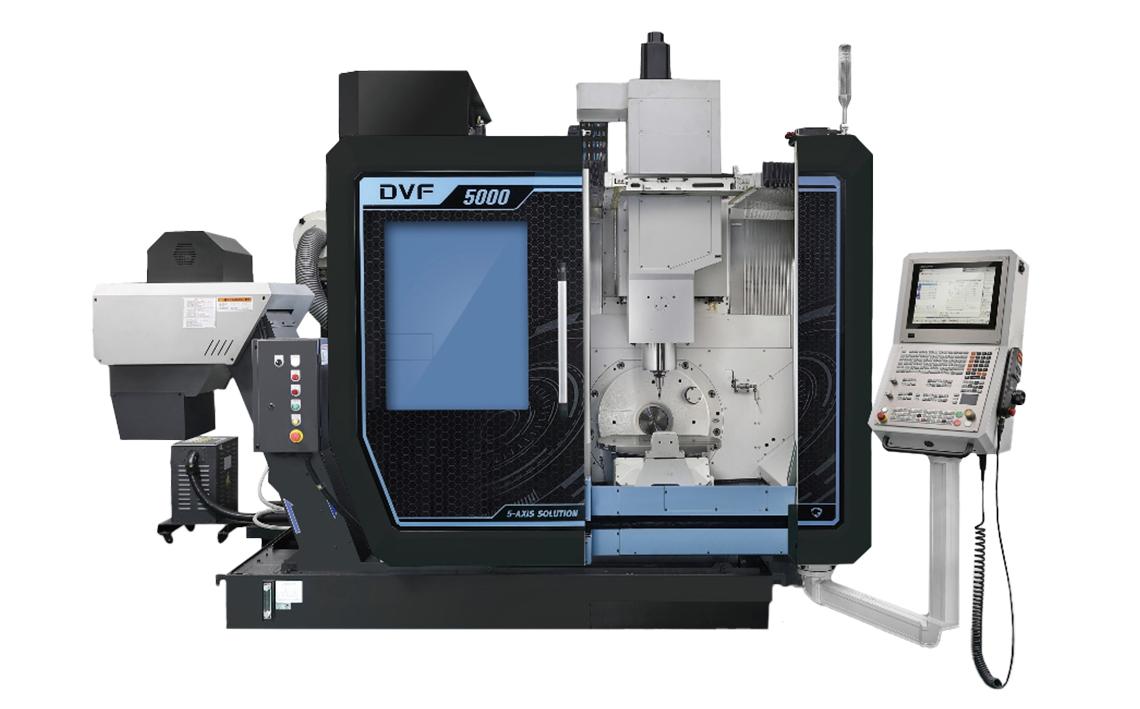
DVF Series:
5-Axis Machining
The DVF 4000, 5000, 6500, 6500T, 8000, and 800T with optional Integrated Automation Equipment are built for multi-surface machining in a single cycle. Delivering high precision and flexibility for complex geometries and tight tolerances.
Typical applications include impellers, turbine components, molds and dies, and aerospace structural parts where re-fixturing introduces error and adds time.
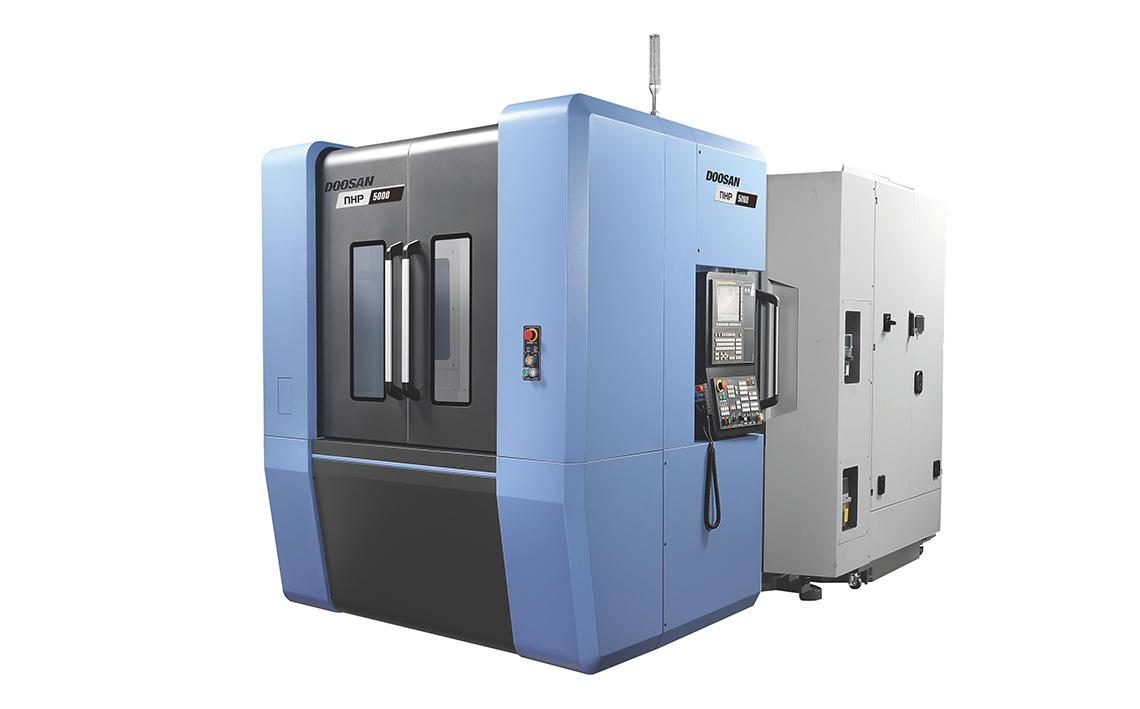
NHP Series:
High-Speed Horizontal Machining
The NHP 4000 and NHP 5000 are optimized for large, high-volume parts where pallet systems and rigid construction are the difference between hitting cycle time targets and missing them.
Typical applications include engine blocks, chassis components, hydraulic manifolds, and structural brackets run well here.
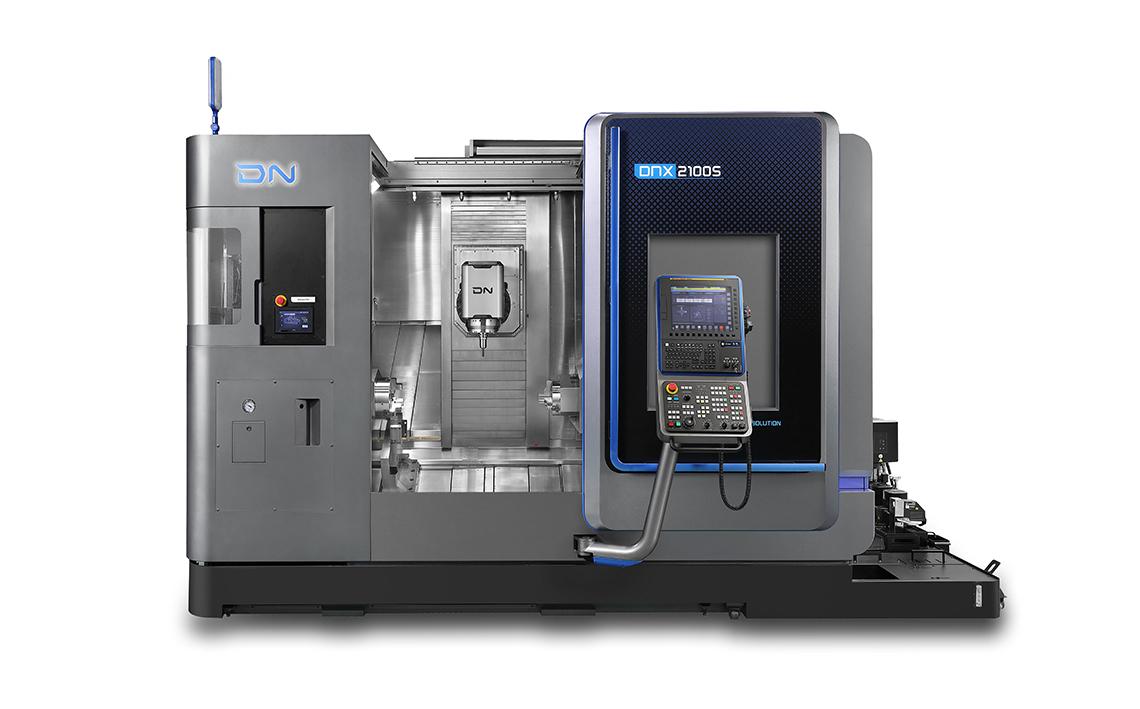
DNX Series:
Advanced Multi-Axis Machining
The DNX 2100 handles powerful multi-tasking for precision components and high-demand applications.
Typical applications include aerospace brackets, valve bodies, and high-precision industrial parts that need more than a standard turning center can offer.
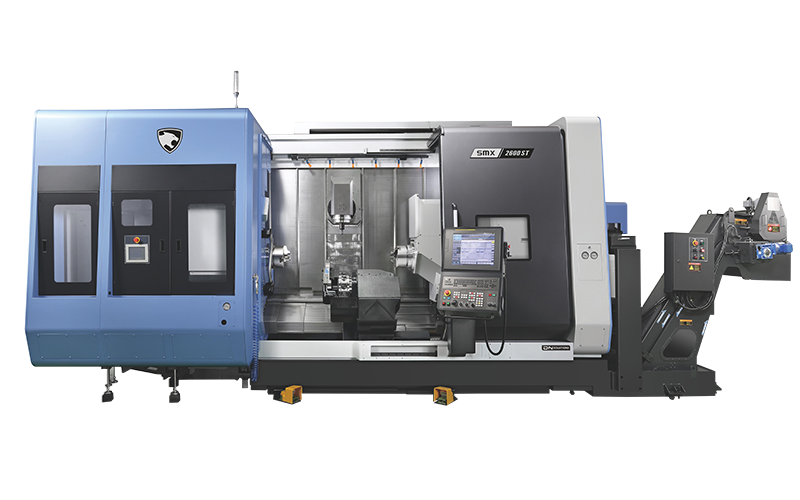
SMX Series:
Multi-Tasking Turning and Milling
The SMX 2100, 2600, 3100, and 5100 combine lathe and milling operations on one platform. Fewer setups, faster production of complex components, and better part accuracy from reduced handling.
Typical applications include gear housings, pump bodies, robotic arms, and precision shafts are natural fits.
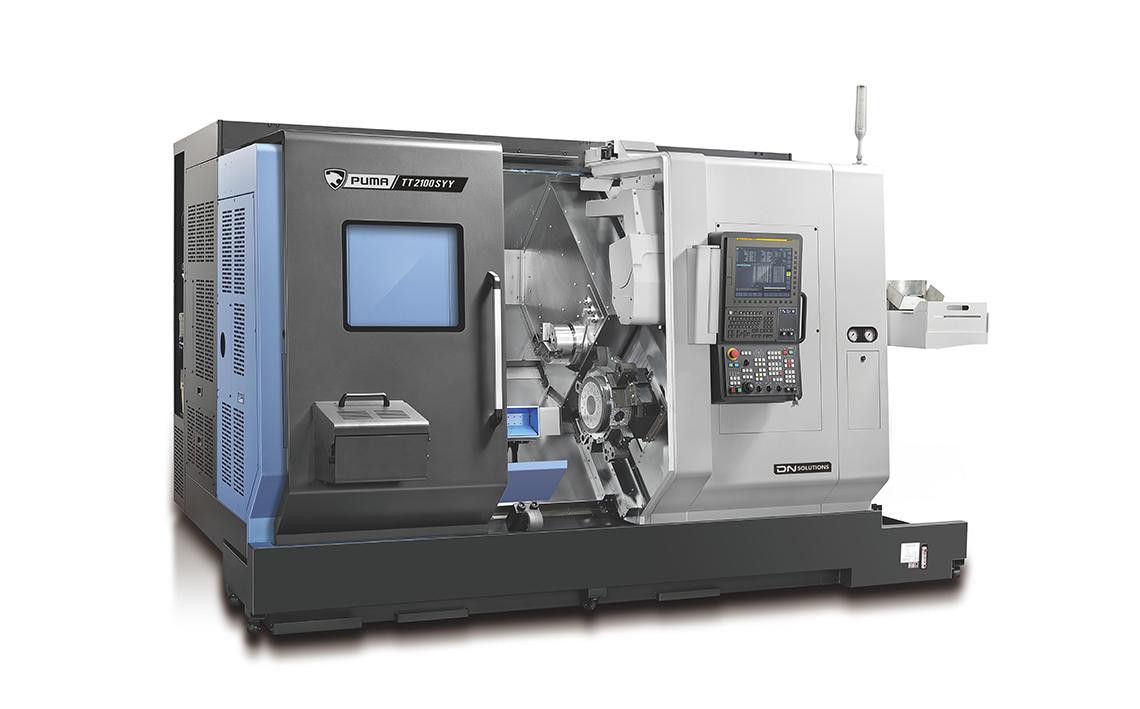
PUMA TT Series:
Dual-Turret Turning
The PUMA TT1800SY and TT2100SYB use dual spindles and turrets for simultaneous machining to maximize throughput on high-volume parts.
Typical applications include shafts, axles, hydraulic cylinders, and transmission components where cycle time is the primary variable.
Fewer Setups: The Throughput Advantage
One of the clearest financial arguments for a high-end multi-axis or multi-tasking machine is the setup reduction. Every time a part moves from one machine to another, there is a re-fixturing step, a new datum to establish, and an opportunity for accumulated error. On complex parts, those setups add time, add cost, and introduce variation.
A machine like the SMX or DNX consolidates those operations. The part goes on once and comes off finished. That is not a marginal improvement on complex work: it can cut total process time by 30 to 50 percent on parts that previously required three or four setups across separate machines, and it consistently improves dimensional accuracy by eliminating the repositioning error that stacks up between operations.
For shops quoting complex parts in aerospace, defense, or precision industrial markets, the ability to quote a faster lead time with tighter tolerance capability is a competitive advantage that shows up in the financial statements.

Support: What It Takes to Keep a High-Precision Machine Running
A high-end machine running below its capability is a cost, not an asset. Getting the full value out of a DN Solutions machine over its working life requires a service organization that knows the platform, stocks the parts, and can respond when something goes wrong.
At Ellison Technologies, our service engineers are factory-trained on the machines we sell and are local to your region. When a spindle bearing fails or a control issue surfaces, we can have someone on-site quickly, with the right parts. That means same-day or next-day response for critical failures, local inventory for common wear items, spindle rebuild services with standard two to three week turnaround and emergency service available in five to seven business days, and preventative maintenance programs designed to keep the machine running at spec rather than chasing problems after they develop.
For a shop running high-value parts on a production schedule, the service relationship is part of the machine investment. It deserves the same scrutiny as the machine specification.


Is a High-End Machine the Right Call for Your Shop?
The honest answer depends on what you are making. If your work involves complex parts with tight tolerances, expensive raw materials, or demanding delivery schedules in markets like aerospace, medical, or precision industrial, a DN Solutions high-end machine is likely to pay for itself in ways that are measurable. Fewer setups, better first-part yield, more consistent output, and a machine that holds its capability over a long working life.
If your work is simpler, other machines in the DN Solutions lineup may serve you better. The point is not to run the most capable machine available. It is to run the right machine for the work you have, and to understand clearly what that choice is worth over the long run.